Going Dark Was the Best Content Decision They Ever Made

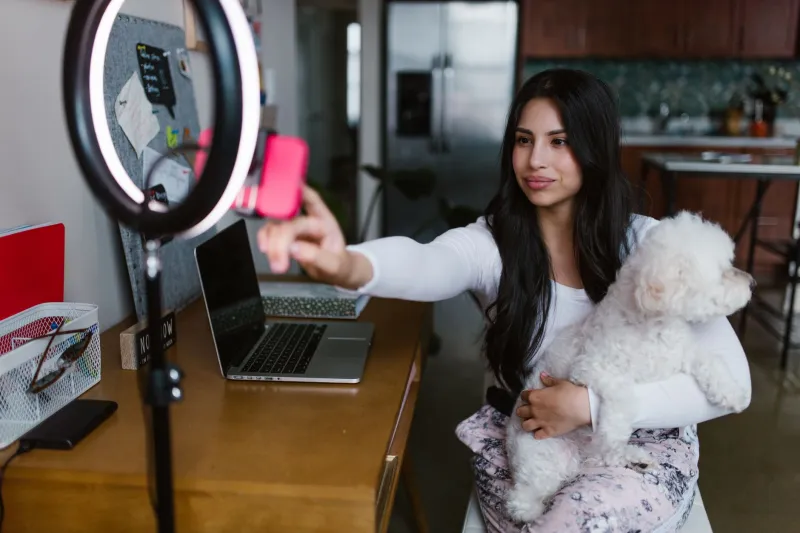
Photo: Cynthia Magana cynthmag, CC0, via Wikimedia Commons
There's a particular kind of panic that sets in when a creator you follow just... stops posting. No goodbye video, no "taking a break" tweet, no carefully worded Instagram note about mental health and gratitude. Just nothing. One week they're everywhere. The next, the feed goes quiet.
For most of us watching from the outside, the assumption is collapse. Burnout. Drama. A scandal we haven't heard about yet. We're wired to read silence as failure, especially in a space where visibility is currency and disappearing feels like going broke.
But here's what's actually happening in a growing number of cases: some creators are choosing the silence. Deliberately. Strategically. And when they come back — if they come back — they're often more compelling, more trusted, and more themselves than they ever were when they were grinding out content every 48 hours.
The Noise We Mistake for Presence
Constant posting creates a kind of optical illusion. We see someone every day and we assume we know them. We track their workouts, their relationships, their coffee orders, their opinions on things that happened 20 minutes ago. It feels intimate. It feels real.
But ask most long-term creators off the record and they'll tell you the same thing: the more they posted, the less they were actually saying. Content schedules have a way of hollowing things out. You're not sharing because you have something worth sharing — you're sharing because Tuesday is a posting day and the algorithm doesn't care that you're exhausted and running on fumes.
The audience senses this, even if they can't name it. Engagement stays consistent, but something shifts. The comments feel more transactional. The connection gets thinner. Everyone's going through the motions.
Disappearing breaks that cycle in a way that nothing else really can.
What the Silence Actually Does
When a creator steps back — really steps back, not just a "I'll be less active for a while" soft pause — something interesting happens to the audience. The absence creates space. People start talking about them in a different way. Not performatively, not as part of a reaction cycle, but genuinely. Whatever happened to... becomes a real question instead of a content prompt.
And for the creator themselves, the silence does something even more important: it lets them figure out who they actually are without an audience watching.
This is harder than it sounds. When you've been performing yourself for years — even authentically, even genuinely — the line between who you are and who your audience expects you to be gets blurry. You start curating yourself in ways you don't even notice. The disappearance, intentional or not, strips that away. You're left with just you, no metrics, no comments, no validation loop.
Some people don't like what they find. Others discover something they'd buried under years of content calendars.
The Return Nobody Expected
The creators who come back from genuine silence share a few things in common. They're usually slower. More deliberate. They post less, but when they do, it lands differently — heavier, more considered, like they actually thought about it before hitting publish.
And audiences respond to that in a way that's almost primal. There's something about a person who walked away from the attention economy and chose to come back on their own terms that reads as deeply trustworthy. They didn't need to return. They wanted to. That distinction matters more than most people realize.
Think about the creators in your own feed who've done this. The ones who went quiet for months and came back with a single long video or a newsletter that felt more personal than anything they'd posted before. The response is almost always the same: the community rallies. Old followers resurface. New ones show up because the return itself becomes a story worth paying attention to.
The internet loves a comeback — but only when it feels earned.
The Risk Nobody Talks About
Let's be honest about the other side of this, because it's real: not every disappearance becomes a comeback. Some creators step away and the audience simply moves on. The algorithm buries them. The cultural moment they occupied closes up like water over a stone. They come back and the numbers are a fraction of what they were, and they have to decide if they're okay with that.
For a lot of people, they're not. And that's valid. Content creation is, for many, a livelihood. Stepping away isn't a luxury everyone can afford, and romanticizing the disappearance ignores the very real financial and professional consequences that can follow.
But here's the thing — the creators who come back and thrive after going dark are almost always the ones who made peace with the smaller numbers before they returned. They'd already grieved the version of themselves that needed the big metrics to feel legitimate. The comeback wasn't about recapturing what they had. It was about building something they actually wanted.
That shift in intention? Audiences can feel it from a mile away.
Choosing Your Re-Entry
There's a version of coming back that's just as performative as constant posting — the dramatic return video, the carefully orchestrated "I'm back" moment designed to go viral. That's not really a comeback. That's just a content strategy wearing vulnerability as a costume.
The creators who do it right tend to ease back in. They don't announce the return as loudly as the departure. They just start showing up again, a little different, a little quieter, sharing things that feel less curated and more considered. The audience figures it out. Word spreads organically. The re-entry happens on the creator's timeline, not the platform's.
That's the real flex, honestly. In a space that's built to make you feel like you're always behind, always one missed post away from irrelevance, choosing when you come back — and refusing to rush it — is one of the most powerful statements a creator can make.
What This Means for the Rest of Us
Most of us aren't creators with hundreds of thousands of followers deciding whether to take a six-month hiatus. But the lesson here applies more broadly than that.
We've all absorbed the idea that visibility equals value — in work, in relationships, in how we present ourselves online. The creator who disappears and comes back stronger is a useful reminder that presence isn't the same as impact, and that sometimes the most authentic thing you can do is step out of the frame entirely.
You don't have to be everywhere all the time to matter. Sometimes the most interesting thing you can do is go quiet and figure out what you actually want to say.
The internet will be here when you get back. And if you've done the work in the silence, so will your people.