Still Subscribed to a Creator Who Lost the Plot? Yeah, Same. Here's Why.
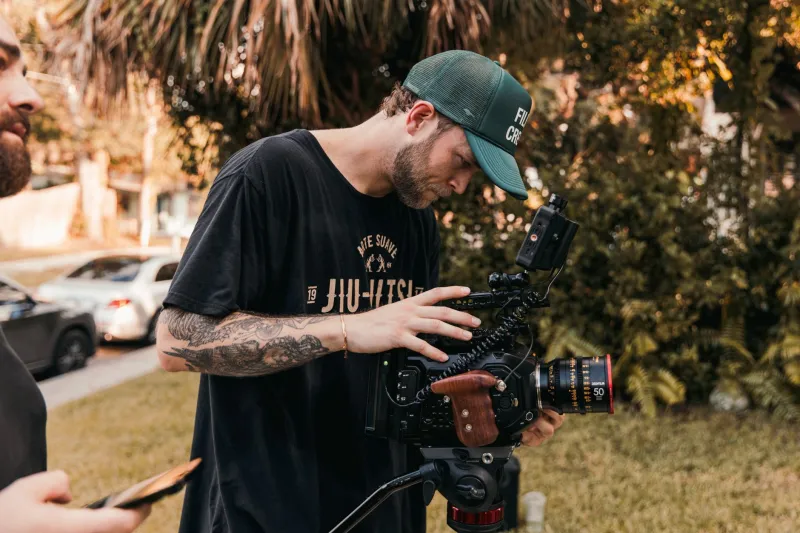
You know the one. You've been subscribed since the early days. Back when the setup was a ring light propped against a bookcase and the editing was rough around the edges and everything felt like it was made because they had to make it, not because a content calendar said so.
Now the thumbnails have a template. The brand deals run longer than the actual content. They've pivoted to a niche that has nothing to do with why you showed up in the first place. And you still haven't unsubscribed.
Welcome to the content graveyard — a place that exists not in abandoned channels, but in the subscriptions of people who remember what something used to be.
What "Losing the Thread" Actually Looks Like
Decline arcs in creator careers don't usually announce themselves. There's no press release, no official pivot memo. It happens in gradients. A slightly more promotional tone here. A video that feels focus-grouped there. A comment section that used to feel like a conversation and now feels like a customer service queue.
For some creators, it's obvious money-chasing. The person who built an audience on brutally honest product reviews starts doing sponsored content for brands that directly contradict their previous takes. The lifestyle creator who documented a genuine journey starts selling a course about the journey before the journey is even over.
For others, it's subtler. A values shift that plays out in real time across years of uploads. Political opinions that seem to migrate toward wherever the algorithm is currently rewarding. An aesthetic that used to feel personal and now feels like it was generated by a mood board committee.
And for some, it's just exhaustion wearing the costume of evolution. The ideas ran out. The format got stale. But the channel is still going because stopping feels like failure, so they fill the space with content that technically exists without really saying anything.
The Loyalty Factor
Here's one reason you're still subscribed: you built something with this creator, even if they don't know it.
Not literally. But the years of watching, the inside jokes that live in the comment section, the specific phase of your life that their content soundtracked — that's real. Unsubscribing feels like erasing something. Like admitting that the version of them you connected with is gone.
So you keep the subscription as a kind of memorial. You watch the new stuff with one eye, the way you watch a sequel to a movie you loved that you already know isn't going to be as good. You're not there for the content anymore. You're there for the continuity.
Psychologists call this the sunk cost fallacy when it applies to money, but there's an emotional version of it that doesn't have a clean name. You've invested time, attention, and genuine feeling into this person's creative life. Leaving means accepting that the return on that investment is diminishing. And humans are not great at accepting that.
The Morbid Curiosity Factor
Let's be honest about the other thing that keeps people watching: it's kind of fascinating to watch someone lose the thread in real time.
This isn't mean-spirited — or at least, it doesn't have to be. There's a genuine anthropological interest in watching how people navigate the pressures of public creative life. When a creator who built their brand on authenticity starts clearly performing authenticity, there's something almost compelling about watching the seams show.
The comments sections of these videos are their own genre. "I miss the old you" posts sitting alongside "growth is good, let people change" replies. Longtime subscribers trying to articulate what's different without being able to name it exactly. New viewers who have no reference point wondering why everyone seems so nostalgic.
It's parasocial archaeology. And it's weirdly hard to look away from.
The Creator's Side of This
Here's the part that often gets left out of this conversation: the creator usually knows.
Not always. Some creators genuinely believe they're in an evolution when they're actually in a spiral. But most, on some level, feel the gap between what they're making and what they used to make. They feel it in the comments. They feel it in their own gut response to rewatching their old stuff. They feel it in the way posting used to feel like relief and now feels like maintenance.
The question of what creators owe themselves when the work stops feeling real is genuinely hard. Platforms are built to reward consistency above almost everything else. Audiences, even dissatisfied ones, generate engagement. The machine doesn't stop because you're not feeling it.
But there's a version of creative integrity that says: if you can't make the thing with honesty, maybe the right move is to stop making it until you can. Or to change what you're making so dramatically that it's clearly a new chapter rather than a deteriorating old one.
The creators who navigate this best tend to be the ones who tell the truth about it. Not a dramatic announcement — just an acknowledgment, built into the work itself, that something has shifted and they're figuring out what comes next. That transparency, counterintuitively, often reconnects an audience that had started to drift.
What You're Actually Looking For
If you're still watching a creator who's lost the thread, it might be worth asking yourself what you're actually hoping to find.
Sometimes the answer is simple: you're holding out for the comeback. You've seen creators go quiet, go through something, and come back making the best work of their careers. Hope is a reasonable reason to stay subscribed.
Sometimes the answer is that you're processing your own sense of loss through someone else's public arc. That's valid too, even if it's a little uncomfortable to admit.
And sometimes the answer is that you've just never gotten around to clicking unsubscribe, and the algorithm keeps serving you the content, and you watch it out of habit rather than genuine interest.
That last one is probably the most common. And it's the one that's worth paying attention to — not because watching out of habit is some great moral failing, but because your attention is the thing being monetized. And it's worth deciding, intentionally, where you want it to go.
The Graveyard Has an Exit
The content graveyard isn't a place you're trapped. It's just a place where things that used to be alive are still taking up space.
You're allowed to leave. You're allowed to stay. You're allowed to feel genuinely sad about what a creative project used to be and grieve it the way you'd grieve any good thing that changed into something else.
What you don't have to do is pretend the change didn't happen — or that noticing it makes you a bad fan. Sometimes the most loyal thing you can do for a creator you once loved is to stop watching the version of them that isn't really them anymore.