Curated Chaos: How 'Unfiltered' Became the Most Polished Aesthetic of All
The Pivot We All Applauded
Remember when creators started showing the behind-the-scenes? The unmade beds, the crying-in-the-car videos, the "I almost quit" confessionals that racked up millions of views. It felt like a revolution. Finally, someone was telling the truth.
We celebrated it. We shared it. We said this is what the internet needed more of.
But here's the thing nobody wants to say out loud: a lot of that "raw" content is just as constructed as the perfectly posed beach photo it was supposed to replace. The lighting is still good. The caption is still punchy. The timing still hits the optimal posting window. And the vulnerability? It's been workshopped.
That's not an accusation. It's just what happens when honesty becomes a content category.
When Sharing Becomes a Format
There's a version of oversharing that genuinely helps people feel less alone. A creator talks about their anxiety disorder, and someone in rural Ohio finally has language for what they've been experiencing for years. That's real. That matters. The connection there isn't manufactured — it's the whole point.
But then there's the other version. The one where you notice that your "low moment" post performed three times better than your last five videos, and suddenly your brain starts cataloging future lows as potential content. You're not lying, exactly. The struggle is real. But now you're also packaging it. You're thinking about the hook before you've even finished crying.
This is the authenticity trap in action. The platform rewards vulnerability, so vulnerability gets optimized. And the moment you start optimizing an emotion, you've already stepped a little bit outside of it.
The Imperfection Aesthetic Is Still an Aesthetic
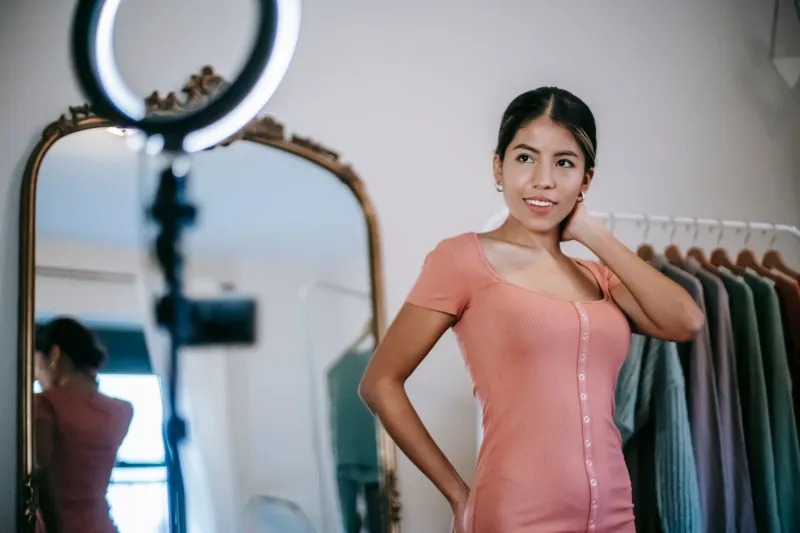
Scroll through any major creator's feed right now and you'll spot it almost immediately — what designers would call a "controlled rawness." The coffee cup that's slightly out of frame. The mascara smudge that somehow landed perfectly under the eye. The outfit that looks thrown together but is actually a very specific combination of vintage and contemporary pieces.
This isn't a criticism of anyone's personal style. But it is worth naming: we've developed an entire visual language around looking unpolished, and that language has rules just like any other aesthetic does. The difference is that breaking those rules doesn't read as authenticity — it just reads as bad content.
So now we have creators performing realness the same way their predecessors performed perfection. Different costume, same stage.
Why We Keep Falling for It (Including Ourselves)
Here's where it gets genuinely complicated, and where it's worth being honest about our own role as both consumers and creators.
Humans are wired to respond to vulnerability. When someone shares something that costs them something — embarrassment, privacy, the risk of judgment — we feel closer to them. It triggers empathy. It builds trust. Evolutionary psychologists will tell you this goes back to survival: knowing who in your community was willing to be honest was crucial information.
Social media platforms figured this out and built entire recommendation systems around it. Emotional content gets engagement. Engagement gets reach. And creators who want reach learn, consciously or not, to produce emotional content.
The result is a feedback loop that makes it genuinely hard to know where authentic expression ends and performance begins — even for the person doing the sharing. You might start a video because you're actually going through something hard. But by the time you've edited it, written the caption, and hit post, you've also made a content decision. Both things are true simultaneously.
A Framework for Checking In With Yourself
None of this means you should stop sharing. It means it's worth asking yourself a few honest questions before you do.
Who is this for, really? There's a difference between sharing something because you've processed it and think it could help someone, versus sharing something because you're still in the middle of it and need an audience to validate the experience. Neither is automatically wrong, but knowing which one you're doing matters.
Would you share this if it tanked? If the answer is genuinely yes — if you'd post it even knowing it would get twelve likes and zero comments — that's a decent sign the impulse is coming from a real place. If the answer is no, sit with that for a second.
Are you sharing the thing, or the version of the thing that makes sense as content? Sometimes these are the same. Often they're not. The version that makes sense as content has a beginning, middle, and resolution. Real life is messier and doesn't always wrap up neatly by the time you need to post.
Is this something you'll be okay with existing forever? The internet is long. What feels cathartic to share today becomes a permanent part of your public record. That's not a reason to never share — it's just a reason to make sure you actually want it out there, not just that you want the connection it might bring right now.
Genuine Connection Still Exists — It Just Looks Different
Here's the part that doesn't get said enough: real connection on the internet is still possible. It's just quieter than the algorithm-optimized version.
It's the creator who shares something small and specific — not a dramatic breakdown, but a particular feeling about a Tuesday afternoon — and someone in the comments says "I didn't know anyone else felt that way." It's the post that doesn't perform especially well but generates a handful of DMs from people who really needed to read it.
Authenticity, the actual kind, isn't usually optimized. It doesn't always have a hook. It doesn't resolve cleanly. And sometimes it doesn't perform at all by the metrics we've been trained to care about.
But it tends to build something more durable than a viral moment. It builds the kind of audience that actually sticks around — not because they're chasing content, but because they feel like they actually know you.
The Realest Thing You Can Do
Maybe the most honest move isn't more vulnerability. Maybe it's getting comfortable with a little more opacity — deciding that not everything needs to be content, that some things can just be yours, and that the act of protecting certain parts of your life isn't inauthenticity.
The creators who feel the most genuine aren't always the ones sharing the most. They're the ones who seem to know the difference between what they want to say and what the algorithm wants them to say.
That gap is worth paying attention to. It's where the actual you lives.